Sunday, October 23, 2011

The Places We Need

A friend is enjoying the final morning of a weekend retreat. He is in a place I know well, and it is easy to imagine the options from which he chooses the path for his last walk under a cool but sunny October sky. It is his birthday today, and he returns this afternoon to his family and its plans and its needs. With the retreat, he made a distinctive choice for how to usher in this next chapter of his life. It is a choice I understand.

Another friend is walking the streets of New York this morning. He is alone after an evening gathering of old friends and former colleagues. His train leaves in a couple of hours, but he heads this morning to places that he knows well from living here twenty years ago. He is a planner, and so I imagine he walks with a departure time guiding his steps, his pace. The city around him is an environment in which some people walk comfortably with themselves. This friend certainly does.

I reflect this morning on fresh memories of standing in a sunny field threaded by low stone walls. I had set out early yesterday with maps and directions to an old farm in the Blackstone River valley. Driving there alone, I got to make as many wrong turns as I needed near the end of the trip. Far from highways and interstates, I had almost resigned myself to not finding Cormier's Woods. I was ready to undertake the hour drive home when the road sign appeared, and in ten minutes I was standing alone in a quiet New England field.

We all get to the places we need.

Thursday, October 20, 2011

Father Love

I will admit that I cried when I first saw this photograph on eBay.

I did not need to know who the father was, where he had lived or when. I did not need to know who had taken the photograph. I wager a reaction similar to mine, however, had motivated someone to pick up the camera just then. The record of a father's love on a Sunday afternoon...

Who does not want a Sunday afternoon like that? Who does not want a father like that? Who does not want to live with that memory somehow touching every Sunday he still gets to live?

Saturday, October 8, 2011

Red Beans

It is the early morning hour of a day you have dinner guests.

The red kidney beans have soaked all night.


After work yesterday you went to the grocery store and picked out your sweet onions, the green peppers, the stalks of celery. You hunted and found the smoked ham hocks required by the familiar Paul Prudhomme recipe. You decided against more white pepper and cayenne pepper -- you know your mother's Monday pot of red beans never needed them.

Twelve hours to let all those ingredients bubble and thicken on the right front burner of your stove before you are ready to fix each of your guests a Sazerac cocktail. And then your New Orleans act can end.


You know these two guests well. You know you can get them to tell you more about Spain and the vacation there that they arranged for their families this past summer. You know they will be ready with questions about your own venture last weekend into the rainy Berkshires. They will understand a Melville pilgrimage.


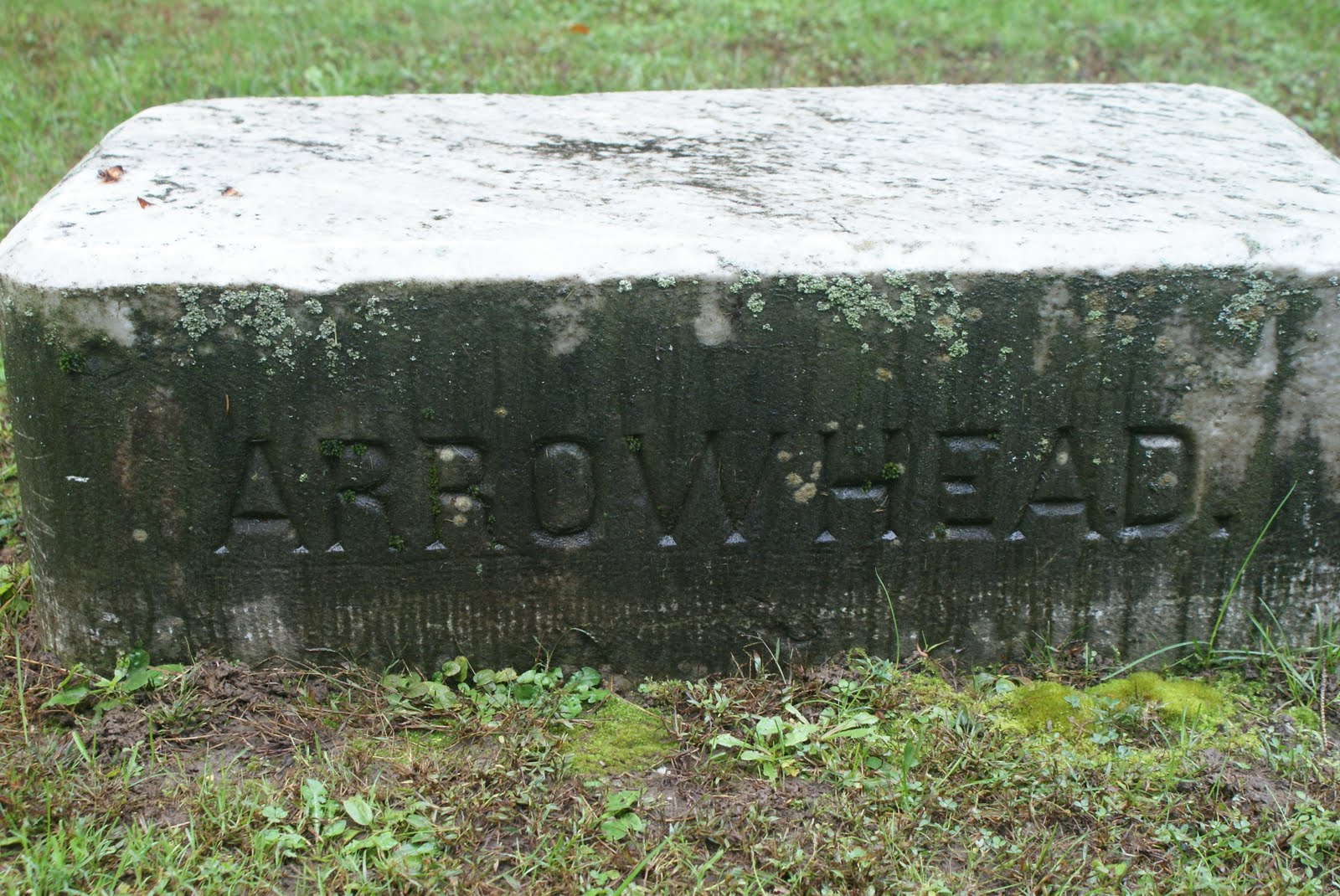
You will not talk, though, about the grey skies above the field behind Arrowhead, the Pittsfield farm where Melville completed Moby Dick within sight of the mountains. You will keep that memory for yourself, the quiet, the cool air, the sense of yourself that comes in those moments.

Your guests are bringing a creamy Spanish dessert. The moment in which it comes out at meal's end will find each person at table smiling with his distinctive memories.

Thursday, October 6, 2011

French Teacher

In a bookstore in New Orleans this evening, a woman will read from a recently published book of her poetry. Emails from the bookstore keep me posted on such events. Ever since the December after Katrina, when I ordered my Christmas gifts from the store, I have received these regular prompts to imagine literary evenings in an uptown neighborhood of New Orleans.

I do not hesitate on a busy day to delete emails sent from the bookstore. After all, what’s the likelihood of my being in my hometown anytime soon?

In this morning’s email, though, I discovered a name that started me remembering. Forty years ago, as a sophomore in college, I had taken a course in twentieth-century French literature. It was a 400-level course taught entirely in the target language, and I had just begun my study of French the year before. After summer courses on the 200-level and a readings course from a delightful dandy of a teacher who taught perched on the edge of his desk, I resolved to take a serious plunge.

Madame was my serious plunge.

In my years of schooling I had grown accustomed to teachers who clearly took pains to win their students over. There were rewards for doing well – praise, smiles, the suggestion that we were on our way to interacting as colleagues. In contrast, I sat in my first week of classes on twentieth-century French authors and encountered a teacher who was not going to woo me or anyone else in the room.

Every class I listened to a French that was classically calm, sophisticated in its distinctions, never sentimental or fussy or confused. About Madame there was the severe elegance of the French academic. Or so I surmised, barely twenty years old myself and five years away from my first view of Paris.

The truth, hard to credit, is that she had been a woman in her mid-30s at the time, a young woman who had grown up in Colorado and Texas. She spoke, nonetheless, with authority about Gide and Giraudoux and Sartre and Proust.

Somehow or other, I have to think, she was even then in the process of becoming the woman who could write thirty years later:

…at most periods our lives just flow through undifferentiated and unremarkable territory… But there are exceptional moments when we become aware of the terrain, or realize it has changed under us, and at crucial times we find ourselves on an apex, looking Janus-like at ourselves and our possibilities—the past sloping one way, the future another.

I continue to learn my lessons.

So, I suspect, does Madame.


Passage quoted from Finding Higher Ground: A Life of Travels (2003) by Catharine Savage Brosman

Thursday, September 22, 2011

A Writer's Home: John Greenleaf Whittier

What does the bookish life look like? Some people visited Amesbury, Massachusetts, seventy-five years ago with that question in mind – enough people, it seems, that custodians of the Whittier Home had postcards printed for sale to its visitors.


In the 1930's there might well have lingered about a writer's house like this a kind of nostalgia. Sturdy hardcover readers that visitors would have encountered in their grade-school classrooms regularly featured writings by John Greenleaf Whittier. Here was the flavor of daily life in New England much as Thornton Wilder tried to evoke it for theatergoers in his 1938 play Our Town.

The wallpaper as it appears in the old postcards is still on the walls of the Garden Room. I saw the old green paper in the poet's study this past weekend. Likewise, the guide pointed out, the rug on the floor is the very one across which the poet had walked.

I got to stand this past Sunday by the window beside which the poet had rocked sunny days and snowy.

But then so had any visitor to the house in the 1930s.


What I would like a chance to do is stand by that window at night – lie in a bed upstairs later and listen to the house settle through the night – wake up at three o'clock and hear rain on the roof – drink a first cup of coffee on the steps to the backyard in the early morning. Unfortunately, I probably know all the practical reasons why the custodians of such literary properties cannot allow an overnight visitor, even one willing to pay generously for the privilege.


I bet a modest guestroom with a firm, modern mattress and a private bath would sell, though.

Friday, September 9, 2011

Nearing Summer's End

One of my brothers collects random pieces of old hotel china. He and I have not spoken of the exact nature of the lure these items have for him. His decorating instincts are impeccable, though, and mismatched plates and saucers appear in just the right places on walls or atop side tables in his New Orleans home.

My brother has not put into words for me the imaginative place to which these old dishes invite him. I can hear him say, "They're just fun."

I suspect there might be something lost for him in anyone's attempt to probe the secret behind a vanished hotel or its dinnerware. He may not even think there is a secret.

He might sigh with a hint of exasperation if he knew I was writing about the whole situation.


Hotels that are no more suggest long seasons that will never come back.

The Checkley House no longer stands on a promontory in Prout's Neck, Maine. A vivid evocation of the life that once swirled on the beaches below it came from the brush of Winslow Homer. The painter's studio was not far from the Checkley, and it was a member of his family who later linked the hotel to Homer's 1890 canvas Nuit d'été.


That summer night is over.

All the summer nights that guests at the Checkley had the good fortune to enjoy are over.

An old postcard is a way to summon a ghostly glimmer of those days and nights.

A piece of old Checkley House china might do the same.

Tuesday, August 30, 2011

Bowls of Flowers

Three Augusts ago a niece of mine was getting married. When she and her fiancé began planning the rehearsal dinner, I was able to offer them the use of one of the public rooms where I work.

The morning of the dinner I worked with the gentlemen from facilities in setting up eight round tables. Tablecloths hung neatly over the seats of the metal chairs.

I did not remember hearing anything from my niece or my brother and his wife about flowers for the tables. Amid all the wedding planning that they had been doing on their own, how easy it might have been to let something minor like that slip.

I got into my car and drove to a local market that had an extensive outdoor nursery. Eight hanging baskets of white impatiens fit into my hatchback for the short ride back to work.

Wicker baskets could effectively hide the clay-colored plastic pots, I thought. I headed to a nearby bargain basement. Before I could find eight identical wicker baskets deep enough for the impatiens, I came across a stack of ceramic serving bowls, each the same deep red orange.

In a short while I was back at work. I had placed each of the eight plants in its own bowl. The line of orange bowls, the row of white blooms made me stop. The calm regularity touched something inside. They might possibly prove unnecessary for the evening's tables, but I recognized that I had done something that provided me a distinctive pleasure.


I walked into my apartment yesterday after work. Twenty-four hours after Hurricane Irene, the windows were open and sun filled the quiet rooms. The previous week I had used one of the red orange bowls from three years back for flowers to celebrate the successful completion of a work deadline.

The bowl of flowers made me stop. The calm and regularity touched something inside. Three years of conscientiously building a new life, and I have learned to recognize more surely the things that provide me that distinctive pleasure.

Thursday, August 18, 2011

Coleus

Lugustrum and boxwood and arborvitae.

Hydrangea and coleus and begonia. Sometimes zinnias and caladiums. One rare summer, sweet peas climbing up a trellis.

Childhood gardens hold sway over our hearts and memories. If there is a photo that brings any of them back, it brings them all back. There are mysteries about why only some things grew in the summer gardens my mother planted. Governing the front yard were landscape principles lost in generations of family gardeners long past.

So I have three pots of coleus on the edge of my side porch. They started a year ago as shoots from one summer annual that continued to flourish near my kitchen window through autumn and winter and spring.

Early this summer I bought the three clay pots and a bag of potting soil. I transplanted the shoots from their transitional jars of water. I placed the pots outside, a little unsure whether they would survive real air, real sun, real rain. Daily I carried my watering can down the stairs to the side porch connected to my apartment.

They take their mid-August bow before my camera.

They are all that remains of the begonia and hydrangea and caladium around which my mother dug her hand shovel decades ago.


The black-and-white photograph inspired an earlier post on Writing Cabin. Please feel free to visit it.